ANY INSIGHTS YET?
SEASON 3 | EPISODE 9
How to Transform Data into Compelling Narratives with James Addlestone, Head of Data Arts at Saatchi and Saatchi
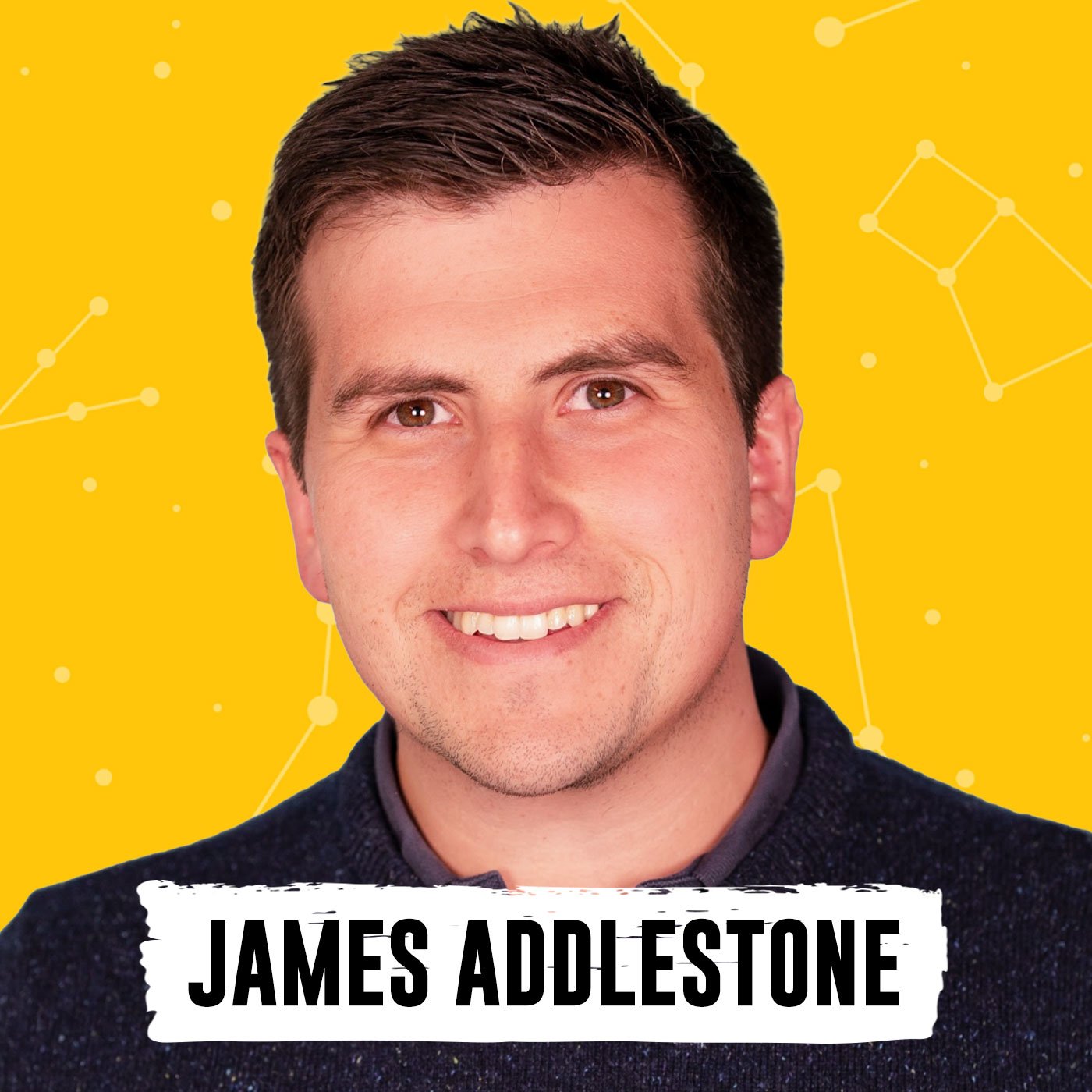
Episode Description:
Most brands use surface level data to market to superficial stereotypes.
James Addlestone, on the other hand, uses data like a detective, reading between the lines of people’s survey responses and finding innovative ways to get to the truth behind their behaviors.
With a background in behavioral economics and a deep appreciation for detective fiction (we talk quite a bit about Agatha Christie), James brings an exciting approach to data-driven strategy: one that combines quant, qual, and creative curiosity.
During our conversation, James challenges the industry’s overreliance on survey panels, pre-loaded category drivers, and overly-tidy narratives that tend to collapse under real-world scrutiny.
By contrast, James makes the case for embracing those moments when the data doesn’t quite make sense and treating that ambiguity as an invitation to look closer.
In this episode, we explore how James uses data triangulation, not silver bullets, to connect the dots between data points, which leads not only to new campaign directions, but can also result in subtle shifts in operations and product innovation.
Some of my favorite aha moments from our conversation include:
The “qual sandwich” framework James uses for insight generation
Why it’s important to challenge company myths every so often with fresh data
How a surprising spike in tomato sales led to a deeper investigation and a new campaign direction for a major grocer
How the pet brand, Chewy, focuses on “moments that matter” and why moments-based segmentation matters even more than traditional demographics
Three reasons why AI won’t replace good analysts anytime soon
Advice for junior analysts and how to use different AI tools to help with big data projects


-
James Addlestone: [00:00:00] I often joke that one of the biggest challenges we have is if we tell somebody something they already know, then it's boring and we haven't added any new value. If we tell 'em something that's new and interesting, then they don't believe you because, uh, 'cause they thought something different. We're constantly trying to find that battle of being believable, telling the narrative whilst also being being interesting, which is hard.
Chris Kocek: Welcome to any Insights yet the podcast that explores the intersection of strategy, inspiration, and branding. I'm Chris Kocek. In today's episode, I'm joined by James Addlestone, head of Data Arts at Saatchi and Saatchi. James has a somewhat unusual background as both a data scientist and behavioral economist, and his approach to data feels more like a detective story than a dashboard deep dive.
That's because James uses a variety of techniques to help with everything from strategic consulting to performance marketing to enhancing the customer experience. His work crosses multiple categories with past clients, including Ralph, [00:01:00] Lauren, Tesco, and Subway among others, and he's made a career out of finding those nuanced human truths that often get lost in spreadsheets and survey results.
During our conversation, James and I talk about why most brands end up marketing to superficial stereotypes instead of real human truths and why you should never ignore outlier data. We also talk about the skills that you should double down on if you want to be a successful analyst, and we explore some different AI tools James likes to use on different projects.
To get things started though, James and I talk about a World War I data point that had a profound impact on him when he was a teenager.
What's the first time you remember noticing something where you were like, doesn't anybody else notice this?
James Addlestone: In the uk when you were kind of 13, 14. Obligatory history is basically, you know, world War I, world War II, but we were lucky enough to go to the battle site of the Battle of the Song, very morbid start to the podcast.
But, um, I [00:02:00] remember the, the teacher kind of sitting in front of the battleground and saying. On day one of, of this battle, 20,000 British soldiers died and, and 30,000 were, were injured. And everyone was kind of looking around thinking, God, that's a lot of people, isn't it? Yeah, it's really bad. Um, and then they said, look, imagine Ellen Road.
Ellen Road is the, um, the football stadium for Leg United, which is my, my local team. And he said, imagine, imagine Ellen Road and imagine overnight half of that entire crowd dies, and the other half. It's terribly injured and that suddenly that number was just massively brought to life, and it was just a very kind of solemn moment of, okay, now, now I get it.
Right. Now that's a lot of people, but I think it's a really good and important lesson of how do you tell a narrative using data? Obviously that data point in itself is fairly meaningless. It's like. I think the UK economy or something, it's like 3 trillion, $3.8 trillion. And it's like, okay, well that in itself is almost entirely meaningless.
Um, but saying the UK economy's $3.8 trillion in the US is $30 trillion, suddenly that number has a friend and you, you have meaning given to that, to that [00:03:00] number. So yeah, I guess that would be my, my aha moment as a kid is how do you start to tell narratives rather than just shout data.
Chris Kocek: Mm-hmm. I read somewhere that people are particularly bad at.
Understanding that a million is very, very different than 1 billion.
James Addlestone: There's actually a really good, um, a really good book, a book called Factfulness. Um, and I, I can't remember the author, but it basically talks through very similar to that, um, a series of different heuristics that we follow when it comes to, to numbers.
That means that we just have like a terrible perception of how the world actually works. And he basically said exactly that. We, we have kind of an order of magnitude bias where once it gets to above a certain number. Our brains are just unable to, to fathom bigger numbers and, and context towards those big numbers.
So we just turn off, it's like, you know, the distance to the sun versus the distance to a different galaxy is it's just, we can't even internalize what that could possibly mean. So we just switch [00:04:00] off and, and brought together, which I think is really interesting and it makes it very difficult when you're working for.
Huge businesses who, who do operate in often a billions to kind of make those numbers real.
Chris Kocek: Mm-hmm. Well, one of the things I recommend in my insight workshops is to look for those WTF data points. Something that makes you say really, like, that's just crazy. And so, like when I was talking with Dan Cohen in an earlier episode, he said.
He had found a data point that said Americans eat over a billion chicken wings on Super Bowl Sunday, or a data point that I'm sure Netflix was aware of in those early days that Blockbuster video charged $800 million in late fees in a single year. Those are staggering numbers. Can you think of any examples where you came across a data point that was just hard to believe, and it compelled you to dig deeper until you got to something of an aha moment.
James Addlestone: This is gonna sound very tangential, but I promise you I'll answer the question, but I, I used to [00:05:00] love Agatha Christie as a kid, the whodunit novels. I do like to think that our job is a little bit like that.
So how do you start to understand all these different pieces of this jigsaw, but just think about it and frame. Those pieces of evidence in a slightly different way that allow you to get to the answer. So I think it's so rare to be honest, that you do find a single piece of evidence or a single data point that gives you the answer.
And to your point with the, with the outliers, you kind of go through this process of trying to understand why, why, why, why, why, why, why. And. I was working for a, a supermarket and we saw, uh, tomatoes had suddenly grown by kind of 35% year on year. I'm like, why has this happened? And we had this dashboard that basically allowed us to look at recipes that were trending.
And we saw that at the time, shakshuka was suddenly massively trending for absolutely no apparent reason. Right? It's like there's no. Logical reason you couldn't have predicted at the beginning of the year that, you know, I, I guess shakshuka is gonna be huge this July. Like it's just,
Chris Kocek: What's the name of it?
James Addlestone: Shakshuka Maybe it's bigger in the UK than it is.
Chris Kocek: How do you spell it?
James Addlestone: I [00:06:00] wanna say S-H-A-K-S-H-U-K-A. I think it's a Turkish or Middle Eastern dish, but it's like eggs, basically. Eggs and tomatoes. Delicious breakfast. I think because British food is generally so bad, um, we basically take pride in, in stealing what we steal with pride.
Like all of our food that's good is just taken from every other country around Europe. So we saw Shakashuka was, was trending and that's a big tomato, tomato heavy dish. And we thought, well maybe there's something around brunch. Um, and then we saw that actually loads of recipes that were trending that had kind of one to two products or that were really quick to make and we basically delved down these different roads of, okay, is it that people are wanting to, to purchase things and, and cook a bit more like as a family or something like that. And we saw pizza ribbon suddenly trending and, and we basically, through quant and then laid through qual were able to show that what was happening very simply was that people were just starting to want to cook together more and we're wanting to cook closer to where they were eating.
I think it's probably a post COVID thing, but people didn't wanna be in the kitchen cooking for an hour and then see their friends for 10 minutes or [00:07:00] see their. Kids for 10 minutes af after that. And, and we only got to that point really, because we saw this really random insight about tomatoes and then suddenly started going on this kind of inception train with loads of, it was almost like on Wikipedia when you have a hundred tabs open, like we, we suddenly got this weird answer just from kind of following the nose.
Um, so I think that kind of thing we see a lot, I think in, in our space.
Chris Kocek: So something about that, you know, I think a lot of people are looking for the silver bullet. Right. There's a silver bullet principle, but it's really about triangulation. Is that fair to say?
James Addlestone: Yeah. I, I really couldn't agree more with that.
It's something that we have to battle with quite a lot is that when people brief something into the data, they're, they're desperate for this kind of, I guess, data point that will win the Cannes lion kind of thing. It's like, is there gonna be something which is so incredible and outrageous that a whole campaign can be built off, off the back of that, and then we can tell this amazing narrative about how we got to that point.
My own perspective is, it's not that it's necessarily like a clear process or methodology around what you should do, but it's [00:08:00] more to that Agatha Christie point of like, can you start to piece these puzzles of jigsaw together to give you a perspective that might be new or different rather than can we find one?
Piece of evidence that we think so startling, it will put the case in our favor kind of thing. One of the reasons why I like the Agatha Christie analogy is because it's not that Poro has access to like all this different evidence that no one else has access to. He's just able to process it and think about it in a different way, and ask the right questions that ultimately get you to to the right solution.
Chris Kocek: And with the tomato example or tomatoes as it were, what did you end up doing with that? So you found that this was happening in the culture, the grocery store didn't really have anything to do with it. What did the store end up doing with this new knowledge?
James Addlestone: So the purpose of what we're trying to do was basically shape the way that we spoke about products in general and to try and shape timing of, of campaign and timing of comms. Um, so it helped us get to a place where we're able to change the platform [00:09:00] from being predominantly about the food in the kitchen. We actually have this sort, the tool that allows you to look at it basically allows you to look at every ad.
In the category and then tries to categorize what the different frames are of all those ads. So you then start to get a picture of typically what kind of products are being shown and what aren't being shown or, or what kind of frames are being shown. And we, we basically found that for this company, most ads were showing the food, um, at the end of the meal.
Basically looking really nice. And that was pretty much it. There was two big components that were missing. There was the actual cooking of it, which we found to be really impactful. Like, you know, people buy food because they enjoy cooking, not necessarily just 'cause they enjoy eating. And then the, the other thing that was really interesting was there was always this kind of trite image of people.
Basically just eating around a table, two kids and two parents like perfectly situated, sharing a really nice anecdote over dinner and like, that's just not how real people eat. Like most of the time it's messy. There's people like picking food at the table. It's finger food lots of the time. If you are hosting, there'll be people in the garden.
There'll be people inside and you're trying to get [00:10:00] everyone together and it's just a much more messy but fun feel. So it changed basically that, you know, food on the table to, right. How do we talk about the story of food more generally? Um, and again, it's just a, a very random endpoint from a very random start point, which is quite nice and part of the magic of, of working with really creative people.
Chris Kocek: Well one of the things you mentioned a second ago with the story of people gathering around the dinner table, and that's just not the way we live anymore, it seems, or or maybe large pockets of society are not like that. There's this idea I've been thinking about, which is, are you marketing to the stereotype or are you marketing to people's actual daily reality?
And I think so many people, because it's so easy, they just market to the stereotype.
James Addlestone: It's easier than ever has been before to find a data point that will confirm an existing point of view or that will give you a shallow view of customers. So it becomes even more tempting to use that, really easy to find insight than to dig even deeper because the difference between the superficial [00:11:00] data and kind of real rich data is, is even more varied.
Like it's even harder relatively to get. Difficult data than it is to get easy data if I, if I can put it that way. So it's even easier to default to a stereotype than it has been before, and it's a bit like we're trying to find the needle than a haystack. The world of synthetic data is basically throwing more hay onto the pile without actually throwing any more needles in.
So we are getting more and more of the same type of data. We're not getting increased richness. We've just suddenly exposed to this massive sea of hay and we're desperately trying to find these needles. It's actually a really good company. In the UK we work with quite a lot. Called, called Meet the 85 Run by a guy called Mark Hadfield and he will spend a lot of time going into people's houses, videoing what they're doing, and then uses a tool on the back of that to then try and help you understand what the key themes were or, or help you delve into that in in more detail, which I think is a really interesting way of finding that rich insight and still making it accessible.
Chris Kocek: What's an example of superficial or shallow data that a brand [00:12:00] might have access to that's not particularly useful?
James Addlestone: I'm gonna be careful with what I, what I say here, but I guess a good example that I'll give is in the electronics space, we work with a big electronics company who, who part of what they do is make, make mobile phones.
I read this 80 page report. One of the key questions across any category that that you'll try and answer first and foremost might be, what are the key category drivers and how does my brand perform relative to each of those drivers? So I can start to understand how if we were to move the needle across this driver, what impact would that have on sales from my business?
So a very standard kind of insight question, and this report came back and the top three category drivers, number one was trust in brand. Number two was, um, from memory the size of data that existed. So the, the data capability of, of the phone. Number three was a camera, and number four was longevity of, of, of battery life or something like that.
I think that's a good example where it seemed like ostensibly that tells you quite a lot. Right. Okay. I've now got this ranked order of this kind of emotional lever, which is brand, but when you start to think [00:13:00] about it for more than five seconds, you're like, okay, what does that actually mean? Like all of those are related really heavily to each other, and there's 60 pages basically telling me stuff that I probably knew intuitively.
It's really incumbent upon the brand to accept that actually you might need to spend a bit more money to explore a few of those different drivers in a bit more detail. To understand why. Why the people want a good camera now? Okay, people are on. Mobile phone. Okay. Is there a cohort? Is there a specific group of people who want a camera for very specific reason?
Are they doing more video calls or for work? Are they traveling to specific locations and wanting to take photos for Instagram? Where are they traveling to? What is the reason why they need really good quality pictures for their Instagram? Like what is it about themselves and what makes 'em have an element of kind of fulfillment about going on those holidays and posting it.
And it's only when you start to answer those questions and get into those details that you can start to communicate those individuals in a way which isn't just this kind of really boring top line category driver, but which is actually something that. Might engage with them. I think 80-90% of reports that you get back give you [00:14:00] maybe the first of 15 jigsaw pieces.
Um, and that's fine. There's still a role to be played, but there's still a lot of jigsaw jigsaw puzzles to find.
Chris Kocek: Yeah, I mean, absolutely. I tend to think of the cultural and category data as useful, but often pretty superficial. Cultural data can lead you to some very interesting tensions, but the category data, it's like it's table stakes.
Everybody in the category hopefully knows this data, and so I often find that it's a little too high level and for me it's usually the customer level data where things start to get really interesting. But can you think of an example where the category or the competitor data was saying one thing, but when you dug into the customer data, you learned something else?
James Addlestone: It's a really, really interesting question. I do think, just to go, I guess, expand on your point with the, the category data piece. I think one of the big challenges that we have is a slight naval gazing when it comes to broad understanding of the category. So I, I guess just to take an example, like we work with a big telecoms provider, and [00:15:00] if we were to answer the question like what are the biggest needs that people have for connectivity, that's gonna be very different to answering the question of what might those needs be, if only we were to advertise that those needs may exist. Often people haven't thought about those needs yet. And, and the way to explore that is to understand what pain points might be that might be completely adjacent to that category. Like what are the things that people are genuinely struggling with in their lives? And then the secondary question is, is there a role that our brand could play in helping people improve and, and helping people get over that, that pain point?
The first question that a brand often asks themselves might be like, what are the pain points within my category? And I just wish a lot of the time we'd instead ask the question like, what are people's pain points? And then can I find a role for my brand within those? Is there a genuine product market fit or not?
That's definitely an area where we see, I guess the biggest, say, say, do gap. It's a Ogilvy quote, which I love. So people don't think what they feel, say what they think or do what they say. Um, and I think that's almost becoming increasingly true. A good example of that is I used to work for a large [00:16:00] chocolate brand, so they believed that something like 40% of people, um, made their decision about what chocolate company to buy based on essentially the mission and purpose of that chocolate brand.
You know, whether they had renewable chocolate or whether they avoided slave labor, et cetera, and spoke about those things. So we did two surveys. We asked people in general what the reasons were, and then what we did is, um, commissioned a survey where we specifically asked people immediately after buying a chocolate bar, so we had people stationed outside shops, and we asked them, why did you buy that, that chocolate bar?
And the number dropped from something like 41% to like 4%. When we asked in those different contexts, just for clarity, I'd seen a study that I'd done a really similar thing. So I was copying someone else's amazing idea. I didn’t come up with that myself and I, I love the idea and, and I still kind of toy with that idea quite a lot of like, how do we start to ask questions in a more meaningful context, in a more meaningful way.
I think it's a really important thing to do if you, if you genuinely care about finding out the truth, it's not good enough just to rely on kind of the top line panel data and say, right, my, my job's done.
Chris Kocek: Yeah, I mean, I often recommend [00:17:00] that people look at the periphery when it comes to data. You know, we talk about these WTF data points, but looking at outlier data that a lot of people ignore because they just think it's an anomaly.
Are there any other examples where a peripheral data point ended up being incredibly valuable to you on a project? I
James Addlestone: I think one example that comes to mind, so I've worked for a lot of supermarkets, Haven, I, there's a different supermarket, so one of the things that we're doing was trying to reboot the way that they segmented their, their audiences.
And they had the segment that's something like 20 million customers and, and maybe 10% of those were using their loyalty card. And they had six segments or something. And there was one segment which was just called like Unsegmented. So there there's like two or 3 million people who they just couldn't understand at all. And they just basically decided to ignore. They're like, oh, these, these baskets are just completely random. Like, no idea what's going on. Let's just ignore it. And I was like, let's have a look at those guys a little bit more. So we actually, they had the highest average order value. They were the most loyal.
I was like, maybe we should, maybe we should consider these guys a bit more as we [00:18:00] got into the data bit more. It turned out there were basically people who were shopping for three generations at a time. So there were people who were shopping for their kids themselves and their own parents, which is why the baskets were so messy and why so, so random and sporadic.
Um, because they had so many different needs. And actually there are a group of people who are largely ignored in marketing, in, in general. Like there is big group of people who are, you know, parents of kids who may be in their late teens, whose parents also really need support and who are really struggling in so many different aspects of what they do.
What it helped us do as a part of the segmentation piece was say, right, let's not ignore this group. Let's work out how we can talk to 'em about needs that they may have. Let's make their shopping experience easier. Let's give them offers that are definitely gonna be relevant for all three generations.
I think there's probably two very different ways of approaching data in our world. I think there's, I guess, media agencies slash consultancies to some extent where what they're ultimately trying to do is find the best way of making a decision.[00:19:00] against a number of specific options. So there might be five, five very specific category options and they're saying, right, which of these five options is best data team? Can you tell, basically do a cost benefit analysis, these five things. But if you're in a world of creating something new, so that's like a net new product or so new product development or like creative stuff, like you're not choosing from a finite number of options.
You need to use data as a source of like illumination. So you need to try and use it to inspire a different direction that you might not otherwise have chosen. In which case the, the role of data basically fundamentally flips. It goes from being how do I understand what's happening on aggregate so I can behave in a way that optimizes like overall profit for my business based on existing constraints to how do I find something interesting and new that is different to what other people are doing that might allow me to play in a new space? And, and I think it's one of the, the risks of our industry is treating the wrong type of question with the wrong type of approach. And they do fundamentally need different approaches in my view.
Chris Kocek: Mm-hmm. Absolutely. With [00:20:00] that supermarket example, how did you figure out that, um, it was a multi-generational shopper.
James Addlestone: The first thing that we did is just have a number of different hypotheses. So we kind of sat in a room, looked through and looked through a 2020 slide deck and said, right, let's understand this group in more, more detail.
How old are they? The age was like varying, quite significantly, but actually we saw kind of weirdly, mainly two bumps. So like a bump in, in forties and fifties and another bump in the seventies and eighties using the same loyalty card. So that was kind of the first, the first little clue. We commissioned a very specific piece of, of quant around it.
So we started to ask people why they're shopping. What products were being, were being purchased for what need and, and we eventually understood that the vast majority of these people were, were that cohort. Ultimately, the only way you can know is, in my opinion for sure, is by asking them like, uh, like having real conversations in a room where you're having open-ended core conversations.
And I think, again, there's a bit of a danger of people who specialize in a specific type of data, um, whether that's [00:21:00] qual or quant or whether that's social listening or what have you, to, uh, massively overemphasize the importance of what they do against what, what other sources may arise. And I think one thing I've started to realize, like as I've go snd, and seen more experts do what they do is just how valuable, like all of these different jigsaw pieces are. Like, it's not like data is more important than a meaningful conversation. Just because that one conversation is anecdotal and might not be statistically significant doesn't mean it's not giving you a richness that you simply can't get from, from doing a large scale QU survey.
And I, I think it's, yeah, it's imperative on all of us to just understand what the role is of each of those different sources of inspiration.
Chris Kocek: There's always this tension between gotta move, gotta earn sales, and gotta learn something. Right? And I love the Marty Neumeyer quote that says something along the lines of good research is the least amount of information that gets you out of first gear and onto the highway.
James Addlestone: I really that.
Chris Kocek: [00:22:00] When you are proposing a research project. Do you have like a quick and dirty version that we're gonna get some for you here in the next three to five days? Or is it usually like a longer study?
James Addlestone: Uh, I mean, massive, massive variation. But I would say, and maybe this is a slight indictment of the way the industry's going, but there's an increasing need of for urgency and obviously an increasing lens on, on cost.
The way that I often frame it in my mind is there's a tension between exploration of letting new things and exploitation, so exploiting what you already know. Most businesses, if you think you already know something. you're unlikely to explore it further, you're unlikely to commission a piece of insight to, to try and find something new.
If you have this data point that already exists in your head and you think, okay, yeah, of course I'm not gonna commission a 50 grand project if I, if I feel like I would know the answer. And that's quite dangerous because we just entered into this world of kind of confirmation bias.
Chris Kocek: Hubris. I already [00:23:00] know this. I don't need to ask any other questions around this. It's settled.
James Addlestone: Yes. Yeah. I mean, I, I often joke that one of the biggest challenges we have is if we tell somebody something they already know, then it's boring and we haven't added any, any new value. If we tell them something that's new and interesting, then they don't believe you because, uh, 'cause they thought something different.
We're constantly trying to fight that battle of being believable, telling the narrative whilst also being, being interesting, which is hard.
Chris Kocek: It is very hard. Now, when we were talking the other day, you mentioned how sometimes there will be these data points that are almost lodged in company mythology.
Nobody knows where they came from, but they get repeated over and over again. They're in all of the presentations, and you called these company myths. What's an example of a company myth that you had to challenge with fresh data?
James Addlestone: Where to start? I think I, I, I actually think this is one of the biggest challenges we have is it's so hard to, to challenge somebody who already thinks they know something, especially if that involves a cost.
But [00:24:00] I think there's a good example, so it's probably about four or five years ago. So I was working on a telco where. There was this widespread belief that the consideration window for purchase was, was three months. So they believed that basically three months before they end the contract. That's when you start that journey to try to understand and explore different options and that that whole kind of customer journey planning, that whole marketing plan from a, from a retention and loyalty perspective was, was all centered around this key moment through three months before you finish.
And we managed to do the research because purely through anecdotal information, we just ask people around the office like, how long do you normally spend? And. We basically found, it was something like two or three weeks we're like, okay, we probably should just test that this three month thing's actually, right.
Um, so we commissioned some research and actually turned out to be more like three weeks. And it's like, okay, well the entire kind of customer showed all of these, you know, hundreds of thousands of pounds spent on this kind of hyper personalization CRM platform was basically unwarranted. Um, so that, that's one example.
There's another interesting example, which I've actually seen multiple times now. So there's a, a fashion company I used to work on. I don't think there was even any research that [00:25:00] backed this up. It was just an idea that they all had, which was the more affluent you are, um, the more price elastic you are.
So, so basically there's no point in giving offers to people who are very rich, um, because people who live in rich areas who are very wealthy, um, they’re just happy to pay on full price. And it is just fundamentally not true. Like, um, and it's proven to be untrue. A a lot of the time actually, the more wealthy you are, sometimes the more likely you are to look around and, and potentially be discerning.
Again, these just kind of big decisions about like something like pricing, uh, to, to our point about kinda incrementality earlier, just continual, suboptimal decisions based on almost a random data point that was never even explored.
Chris Kocek: Well, you mentioned, you know, starting with, with a telcom company, just doing some anecdotal research and that idea of anecdotal evidence isn't enough.
I often find that it's very directional. That it absolutely should be explored or confirmed through quantitative means so that you can say, look, it's not [00:26:00] just four people in the office. We have a little bit of a sampling bias here, but this is kind of where the direction is going. But oftentimes people just poo poo the anecdotal evidence.
They say, that's not good enough. We need statistically significant data. What do you say to people in those situations?
James Addlestone: I often talk a lot about qual sandwiches. Um, so the idea that you, you do, you do qual to understand what the key questions are that you want to understand and to, you know, formulate some hypotheses that you think are interesting around whatever the question is that you trying to identify.
You do some quant to try and validate those and then you, you back it with qual again. So you understand now that I understand the quant and understand that these things are actually true, I wanna understand more about why they're true, um, so that we can kind of frame our response as well as possible.
It's a process, so it's not an overnight thing, but I think it's a useful approach. Not everything can be validated with data and I like, and data is only one, one lens, but I do think it's an important lens. There might be a Bezos quote, but it something, [00:27:00] it's something like if one person says something anecdotally and the data says something different, then always believe the person who says the anecdote, not, not the data.
I don't necessarily buy that, like I, I do think we are all so intrinsically biased and we are. Especially in the marketing space. You know, most people live in London, went to university like a relatively well to do. We're just not that in touch. And, and you know, in the UK we see things like Brexit happening and everyone's like, why?
Why is Brexit happening? It's said, well, maybe because we don't actually understand the average person because we live in such a, an insane bubble. Like maybe we got out of the house a bit more and actually spoke to people a bit more. We might not be so surprised. I think the same was true in the us We, especially the first Trump election people were very surprised by, by that.
It's quite naive of, of people I think, in our industry to think that we can understand, you know, 58 million people in the uk, you know, 360 million people in the US just for a few anecdotal conversations. But, but that's not to say that they don't give you great direction. I just think that you can't then claim to have a really deep understanding of how [00:28:00] people think, feel, behave.
I don't think there is necessarily a right answer, but I’m definitely pro data.
Chris Kocek: Are there specific data tools that you use that help you interrogate the data more effectively?
James Addlestone: I'm sure most people listening to this will be very familiar with. Using like, you know, Google Trends, data, et cetera. But I think the key is using tools like that in a, in a smart way.
So for example, like we've built a product, it's basically using Google search data to look at what people search for, and then it takes, uh, the top eight things that people are most likely to search for having searched for that. And it takes the top eight things that people most likely to search for, for search, for the, for each of those things.
And it gives you this massive map, which is really interesting to start to understand the typical journeys and paths and like adjacent searches that people do relative to different search terms. So it's using kind a very simple tool on Google Trends and then trying to understand, right, how do we start to map out the journeys that people might go on using that tool.
And there's actually, there's a really good book called Everybody Lies. I would implore everyone to look it up. It's, I think it's about five, six years old, but it's basically, it's a guy who decided [00:29:00] to try to verify large stereotypes through looking at people's search behavior. So he found, for example, that like Democrats and Republicans often show very little differences in the kind of things that they search for despite what you might think.
So there, there's loads of really interesting stuff that he found within that. But it goes back to if you can't understand and get the truth from what people are saying, what do you revert to? Well, you can revert to what people are searching for. You can revert to what people are watching. You can try and understand how people are behaving and, and that's really your, I guess, your best source of truth.
Chris Kocek: That book, by the way, was also recommended by Greg Hahn in season two. So you're in good company.
James Addlestone: Yeah, may maybe that's what it's on my mind. The other thing I'd say about search data on on that is it's very good at helping you understand timeframes. So for example, working with the large retailer and we're trying to understand how does Christmas shopping change and what are the main themes around it?
And we found that like really simple things. But we could see, for example, like the exact day when people's behavior went from like buying a nice, thoughtful gift to my wife to like. [00:30:00] Gift card, gift card, gift card, and it's like a, like emergency holiday the day before that you can book and not have to deliver in time for, for Christmas day.
Like stuff like that I think is a really, you know, interesting use of, of those kind of tools. So we could see that people search for presents for their dad like four weeks later on average and they search for presents for their mum. I think a lot of it is in the creative way of using these tools rather than necessarily the tools themselves.
And obviously we're really lucky as part of Publicis group we have, but I think a lot of the time you can get. 80-90% of the way there with, with what's available freely.
Chris Kocek: You mentioned that it really comes down to the mindset or the questions that you ask, the tools, not necessarily the tools themselves.
What are two or three questions you like to ask in the beginning of a project to really crack things open?
James Addlestone: I think there's probably two things that I try to understand early doors. So one of them is first and foremost, the role that specific individual or client wants data to play. There's an old saying, which is like, don't use statistics like a drunk person uses a lamppost for, for support rather than [00:31:00] illumination.
I kind of disagree with that. Like there's a time and a place where actually statistics and data. Is there to support an existing idea. And, and I think knowing what the role is that you are playing for that specific question that that client is asking, or really for that decision that, that client's trying to make, like knowing what the role of data is for them, I think is really important.
So I, I might ask something early on, like, you know, how did you come to the decision to like focus your brand on this audience or like, talk me through your last campaign and decisions that you made to get there. And it just helps me understand the process that they make to decision making in general, and therefore what role I need to play to help them get to a place where they're getting to both a better answer, but also having assurance that they've found the right answer.
And I think the second thing that I try to understand is really understanding why people are behaving in a certain way within a category. So like why, why are people buying that product? What are the main category drivers? Why someone's choosing a specific brand once they are choosing to buy into that category.
That's basically the, the [00:32:00] first exam question. And then suddenly the trees, the roots kind of go from there. And that might take you into a space where actually it's mainly driven by a very specific need, or it's mainly driven by customer or com competitor behavior, or it's managed by something cultural and you're able to then go down your detective route and, and start asking those tech secondary and, and tertiary questions that get you to formalization, that allows you to internalize what's actually going on.
Chris Kocek: So you can never end with just the first question. That's what I'm hearing is you always have to have secondary, tertiary questions, follow up questions to really follow your nose, right?
James Addlestone: What I'd encourage most people to do is to, to basically get learning as early as possible in your career, how to use tools that are readily available if you are a strategist or if you are in a decision making capacity, and then you can kind of follow your nose yourself. I think it's really important that you don't engage in too much fence throwing between, you know, a data team and a strategy team, and actually you try and bond those teams together as far as possible because exactly to your point, you, [00:33:00] you ask one question and extremely quickly, a good analyst will then be asking a second question, and if the person who's briefed them in has gone away, left the desk, or they're thrown a briefer over the corner, then you kind of left making these decisions by yourself and it's not a good position to be in.
Chris Kocek: You've mentioned customer segmentation a couple of times, and a lot of businesses focus on customer segmentation, but you have a different approach. You have a tool that helps you segment key moments. Can you tell me more about that?
James Addlestone: I guess my starting point is. That I think we do segmentation quite badly as an industry, and I think that's because there are so many different use cases for segmenting your audience.
And I think the reason why a media team want to segmentate their audience is to be able to improve efficiency and effectiveness through their media channels, the media why. The reason why a creative team might want to segment is to have much more clarity over who the ultimate design target is and who, what the different communication pillars need to be beneath that in order to make sure that they communicate effectively to everybody, et cetera, et cetera.
[00:34:00] But I think that one of the biggest mistakes that everybody makes is. Most customers aren't defined by who they are, but by the context within which they're found. There's a story that I really like, which I remember really about when I did behavioral economics at uni, and they did an A/B test on monks.
So they, um, there were monks who were taking their monk exams or whatever exams monks need to take, and they placed a beggar. In between the entrance hall room and the exam room. And they told half the monks that they're in a massive rush and they were gonna be late for the exam, and they told the other half that they had loads of time. Don't worry about it. And funnily enough, the half that were in a rush all ignored to the beggar. And the half that went in a rush went and, and gave money or whatever, and chatted to the beggar. And anyone watching that would've been like, God, these these monks are, these monks are assholes. They're just walking straight past this beggar, which obviously isn't true.
Um, it's just a context within which they're found. And I, I guess. Context is at least as important, if not at times, much more important than people's characteristics. Therefore, to round, to round [00:35:00] back onto what what we've done, uh, one of the things that we try to understand is what are the different patterns of behavior that we see, and then how do we create a segmentation of those patterns of behavior?
So we have a diary study that we, that we work with. Part of the, the IPA, um, have a, a diary study where they capture 30 minute by 30 minute windows and we take that at a respondent level and we start to understand using unsupervised learning algorithm, we basically say what are the specific patterns that the AI can detect?
One of the key things that we're trying to answer is what are the specific moments or patterns of behavior when people are consuming fast food? And you could understand that through two different lenses. So you could start to say, I simply want to understand what are the 15 different times and, and patterns of behavior when people are having fast food, that could be a really simple, quite generic question. And you might get to a point where you say, okay, there's treating the kids on a Thursday night. There's being bored on a Tuesday lunch, there's having a cheeky meal before you return to your [00:36:00] meal at home, pre-commute.
But one of the things that we wanted to understand, um, was to find net new consumption opportunities. So instead we ask the question, what are the moments where there's the biggest difference between people feeling hungry and people actually eating QSR. So can we find moments where people are outta the home, they're walking in the street, they're, they're starving, but for whatever reason, they're simply not engaging in eating fast food.
What we wanted to understand was where is there the biggest difference between people feeling hungry and people actually consuming QSR? So people actually having fast food. Like are there specific moments where currently people just don't feel it's permissible to have fast food even though they're starving and at the house.
Um, and we found three very specific moments that we thought were really interesting. We thought, right, if our client could play in this specific moment, then they'd basically be playing in a category of one, because currently no one's having fast food, even though they're starving and out of the home. The question then becomes, how do we make it permissible for that [00:37:00] brand to occupy that space?
Rather than like, let's just take some share of some existing moment that people are, are actually eating in. So it goes back to how do you ask the tool a more interesting question to get a more interesting response.
Chris Kocek: There's a brand here in the States called Chewy. Have you ever heard of that brand?
James Addlestone: I haven't, no.
Chris Kocek: Okay, so it's an online pet store. Basically it's the Amazon of pet stores, if you will, and they've mapped out the customer journey around this idea of moments that matter. And they really seem to understand these key inflection points, like when you first get a pet, when a pet dies, and they've built a system of really personalized, human-centered communications that have actually helped them become an $11 billion brand. When a pet dies, for example, I don't know if they do this for every pet, but they will send a pet portrait to the customer to kind of memorialize the pet a little bit.
James Addlestone: That's amazing value add. I love those [00:38:00] kind of stories, like how do you start to use this data in a way which is genuinely meaningful, like I guess Spotify wrapped would be a classic example of that. Uh, interestingly, I actually used to work with very, um, for, for a company called Medi Vet. So a big pet pet company in, in the uk. And similarly, we were kind of on, on this road of like, how do we start to really be as helpful as possible by understanding possible moments of intervention coming to stand.
If people are canceling appointments often, why is it and how do we help be more flexible around them? For example, again, um, there is a really important role for data to play in helping understand. How brands basically can be as useful as possible. I think that two examples a great one.
Chris Kocek: Yeah. You just mentioned data that can help with a value add.
Can you think of any other examples where you had a data point and it wasn't like, oh, this data point's gonna lead to a huge advertising campaign, but it led to an operational improvement or something that really kept the customer much closer to the brand, which is worth, I think far more than [00:39:00] running another advertising campaign.
Can you think of any examples along those lines?
James Addlestone: I used to work a lot in a recommendations engine space. Um, so a lot of the time what we tried to do is to find stretch options. A colleague of mine was working on a recommendations engine for, for a large broadcaster in the uk and they were basically trying to understand how can they not just recommend the next best thing that someone might want to watch and create kind of an echo chamber around content, but how do they stretch them into a new category, which is both most more useful for them because it helps them discover something new.
Whilst also being something that's actually useful and, and and engaging for that individual. And again, I just love the idea of how do you start to change a question from like, how do I just simply sell more product X tomorrow to, how do I ensure I'm personalized in a way that actually adds value?
Chris Kocek: Yeah.In the book I had this idea of try it free Tuesdays because I, I recognize that everybody, when they go to a restaurant, they almost always buy the same [00:40:00] thing. One or two things. If you go to a Thai restaurant or whatever's your favorite place, it's always the same thing. And so that restaurant, you know, probably has many other things on the menu.
And there's only so many times you can eat pad Thai.
James Addlestone: Yeah, yeah, yeah.
Chris Kocek: So what if they came up with a, basically, you know, on Tuesdays they would make kind of a batch of, of something that would be adjacent. To everybody's favorite meal and they would just say, look, we're offering this for free. Would you like to try it?
You know, no charge. It's a quarter portion or something like that, or a one eighth portion of what you'd normally get, and that way the person can try it because that risk, you always feel this risk when you go into a restaurant. Do I want to try something new or do I want to go with the old reliable?
James Addlestone: Yeah. Well you are, you are almost perfectly explaining the kind of exploration exploitation concept we mentioned earlier. So. There's a, there's another good book called Algorithms to live by where they talk about this, um, almost precisely, which is they try to mathematically work out at what point should you basically stop your hunt for either a new employee or [00:41:00] should you stop your, your hunt for a new house.
And it's something like after you go 33% of the way through your search, you should then pick the best option that you then see compared to previous options. It's something, I mean, trying to encourage exploration, I think is a really important thing for us in general as a society because I think we are, it's so easy for us to be trapped, and that's, I think that's the same with jobs.
I think it's the same in almost every walk of life. We're so habitual as creatures that we just don't know what kind of utility we might derive from something new, just around the corner to sound too much like an economist, but…
Chris Kocek: That's a huge thing because the echo chamber of algorithms, right? They want to basically keep us in these little bubbles and, and so there is that danger of just being like, well, I know all these things. I don't need to consult with anybody else or talk to anybody else. I, I think this point about exploration is huge.
James Addlestone: And, and I think [00:42:00] part of the challenge exactly to that point is the builders of those algorithms are incentivized to continually optimize to short term attention. So they, they're not trying to build a 15 year engagement plan. They're trying to build, how do I basically get 'em to click on this next thing and just hope that that pattern of behavior will continue to exist forever. That is not a way of increasing both long-term productivity and general fulfillment. There’s a very good book called Stolen Focus, which I, I highly recommend to anybody, which talks about the, the negative impact of basically short term algorithms and, and how we can try and get a, get about avoiding those. But yeah, I, I think it's a real issue.
Chris Kocek: There's gotta be a book called The Addiction Algorithm isn't there? There's gotta be. If not, then there's current it now. Yeah, yeah, yeah. Buy addictionalgorithm.com. TM. I wanna do it now. That's right.
Chris Kocek: Alright, before we get to the speed round, I wanna talk to you about, uh, because we can't talk about anything these days without talking about ai.
Do you think that AI and its current [00:43:00] iteration can do the work of a data analyst?
James Addlestone: It should be able to, and I think this is part of the, the challenge that people grapple with is like logically. There is no amazing reason. If you think about it for just a few minutes, there's no logical reason why ai, the whole role of a, an analyst couldn't be expendable.
If you start to think about it more like 10 to 50 minutes review, if you've worked in a space, you kind of realize quite quickly why that's not the case. And it goes back to a few things that I've already said. I think the first is the importance of train of thought. In that so often you find something interesting that changes the entire question and unless you are able to program an agent to understand how your thought process works in totality, then you are not going to be able to train very easily. I also think that there are trade offs that are just rife that analysts need to account for. So for example, like a, there's a continuous trade off that we have to grapple with, which is between, uh, explainability.
And accuracy of our [00:44:00] models. So, you know, a lot of the time we might be able to build a model that's extremely accurate, but actually it's really hard to explain why the algorithm has said the optimal price for beans should be three pounds, 20, not three pounds. Even though it will decrease short-term sales, we think it will improve long-term sales and the algorithms told us that like, that's a hard thing to sell in, like we, and, and it's really hard for an AI to know what that, what that balance should be.
I think the second reason is there's lots of contextual clues that are given while someone's briefing you in that you often wouldn't as a briefer necessarily stipulate.
So for example, like risk profile, people often don't know their own risk profile, but somebody who's worked with someone for a long period of time or worked in a business. Knows what that business's natural risk profile might be. And again, it's something that an analyst, kind of a really good analyst will intuitively know and, and an AI probably wouldn't.
And again, I think thirdly like storytelling is so important and being able to really engage, you know, the, the ethos and pathos. Like how do you sell the narrative, not just how do you show the data. [00:45:00] And again, at the moment, I haven't come across a good AI that allows you to do that very well. I think if you're a junior data analyst listening to this, I think there are two things that will probably set you apart and, and really add value. I think the first of those is. Really knowing what the right questions are to ask and making sure that you continue that curious mindset. Yeah, double down on curiosity. Double down on, on trying to understand what, what questions different people might be trying to ask. But I think the second, which is often undervalued, is the ability to really tell that narrative through the data.
Um, so how do you really win hearts and minds through making sure that what you explain isn't just a series of numbers. It's a really clearly formed narrative that plays to people's emotions using data as the rational import.
Chris Kocek: Can you think of an example where AI helped you find something that the human eye was unable to?
James Addlestone: We have access to lots of behavioral data, which is often like extremely long and often unstructured big data [00:46:00] sets. Um, and we're able to like anonymize pull in and I, I literally asked the question of I've labeled everybody in a state set who I'm interested in with an X in in this column. Can you tell me what these people tend to over-index on?
Like what are they doing that's different to everyone else in this data set? And it came back with like 15 things that one I verified were all genuinely accurate. I had to prompt it in such a way, which was really clear and I had to be, I had to tell it what all the variables were and I had to structure it in a way that it understood.
But increasingly it's, it's, it's getting better. There is actually a way of structuring data, which is, it is probably a bit technical for this conversation, but it's, um, I've been really mad at recently. So it's called, it's called, croissant which is basically a way of ensuring that your, your data set is readable by an ai, but I think things like that will be increasingly common.
Speaker 3: Mm-hmm.
Chris Kocek: Very interesting, croissant.
James Addlestone: oh, exactly like the French bread. I have no idea. I've, I've, I don't profess to be an expert, but, so I dunno why it's called croissant, but, um, [00:47:00]
Chris Kocek: it caught my eye be because it's rich and buttery. James, because it's rich and buttery. That, that
James Addlestone: and flaky. No, definitely rich and buttery.
Chris Kocek: Just like an insight should be. Alright, so we're, we're at our speed round. What's your favorite number, data man?
James Addlestone: man. Oof. Yeah. What a question. I think people often my favorite colors and favorite names and stuff, but I'm not sure how many favorite numbers I'd have to say. Like, if pushed, I would say, this is gonna be a very geeky answer, but I, I love PI as a number.
It's like 3.1 4, 1 5, 9, whatever the rest of them are. Um, I, I love the golden ratio, so I think it's like 1.62, 1.16. Yeah. But ba basically. These are numbers which are what we call a rational. So what you can't find them by just dividing kind of one integer by another integer, one whole number by another whole number.
They're not an obvious number, but they're really, really important. And the reason why I love that is because I think it makes us realize, or it makes me realize just how [00:48:00] arbitrary, like the way that we've developed numbers and that, and all of our systems and codes actually are, and there's no logical reason really why we, you know, count to 10.
Or why one is a number is quite interesting thought, really, that actually some of the most important numbers are these kind of completely rational numbers.
Chris Kocek: Well speaking of numbers, the invention of zero as a number. Was something that kind of like blew my mind. You sort of think, well, zero's always been there, but no, it was, it was invented.
James Addlestone: All members and all language are really just products of the human imagination. Like I'm, I'm a bit obsessed with the history of measurement. Like measurement basically first started because in Uruk, so it's like a town in Mesopotamia, they were basically trying to find a way of trading and what they did is they imprinted symbols on clay tablets to, to say, okay, this is what I'll trade you. And then they gave people these stones that were filled with what they promised to trade. Um, so they could see on the imprint that, here's what I'm gonna trade and here's a stone that, that I'll give to you. That, that basically is me formulating that [00:49:00] contract.
And that what they found was it was easy just to write on the tablet what they were willing to trade, and then they could all refer back to it later. And that's basically how language started. And I, I just love the idea that before that point, there was no obvious method of communicating these things other than through seeing my three sheep and, and giving you two.
So yeah, measurement's quite important.
Chris Kocek: That's fascinating. Well, what's a subject you recently got super interested in and just went down a rabbit hole because of insatiable curiosity?
James Addlestone: Another thing I've been a bit obsessed with recently is visual perception. There's this problem in the field of visual perception, which it's called the inversion problem.
So basically the idea is if I'm looking at something, it is physically impossible for my brain to accurately and perfectly reconstruct what I'm looking at because there are so many factors that affect the way that I've perceived that object. So everything from the light that's shining on it to the material that it's made out of to the particles it's having to transmit to, to get to me, to how far away it is.
And I don't actually know if this glass is this close to me or or not. My brain is just making a best guess based on the information I have, [00:50:00] and it's impossible for me to actually work it out. And I've become a bit obsessed with this idea because I think it's just so true to basically everything that we do, which is we, we don't really know the truth of anything around us.
All we're doing is trying to get as close as the truth, as we, as we possibly can and trying to reconstruct that truth that may have happened in the past or happens now.
Chris Kocek: We're getting deep.
James Addlestone: Yeah. Sorry.
Chris Kocek: We, we just, we need some scuba gear 'cause we just went deep.
James Addlestone: That reminds me, I, I, I have the piss taken outta me repeatedly because I was pitching once and somebody said.
Um, God, you must have been absolutely drowning in data. And me being like the 26-year-old gee, I was like, oh no. For me it's more like scuba diving. I, I love it so much. And they, they basically rinsed me for that, for, for the next year. But yeah.
Chris Kocek: That's funny. Uh, what's your favorite word in English or any other language?
James Addlestone: This is terrible. I can't actually remember what language it is, but it's something like Kosalig and what it is, it, it means the, like insatiable desire to, to hug [00:51:00] somebody or to, to show affection towards somebody. So the idea that the, that feeling you have when, you know, my daughter walks in and I just wanna give her a massive hug, and we, we don't really have a word to describe that very effectively.
I love the idea that. We're such a product of the language and vocabulary that we have access to. Like, we can only really think in those terms. I love the idea that actually there's whole other languages and ways of describing things, and that might be through numbers, it might be through learning in new languages that give you a, a whole new perception of, of how the world works and human emotion.
Chris Kocek: And what was your favorite subject in school?
James Addlestone: Not maths. Um, yeah. Um, probably history. I'm very interested in understanding human behavior and like for me, data really is just a conduit to that. And I think one of the things that I'm quite obsessed with is trying to understand what are the kind of genuine universal human truths.
And I think history is quite an interesting lens to look at that, like, the way that people behaved in the 14th century under completely different conditions is obviously very different to the way that we behave [00:52:00] now, and giving us all the understanding of what human nature really is, I think is is important.
And I think history is the only way to really understand that because it just gives you access to so many different contexts that help you understand humans better.
Chris Kocek: Now, you've mentioned already a lot of good books that you'd recommend. What's the most recent good book you've read that may not be work related, but just made you think, wow, that was amazing.
James Addlestone: I love Marcus De Sautoy, and I'm probably pronouncing his name wrong. I've actually never heard it said out loud. He wrote a recently good, a really good book. I think it's the Mathematics of Creativity or is that how mathematics shapes creativity? His thesis is that we kind of taught from a very young age that art and science are kind of diametrically opposed. And he basically has written an entire book that explains how intertwined those two subjects are. And it obviously speaks to me because I passionately believe that to be true. We're industry obsessed with false dichotomies and one of the worst of those is you like history, you like art, join this camp, you like, [00:53:00] um, math and science, you're in this camp and that's, you know, the rest of your lives.
Chris Kocek: Is there a brand whose work you really admire or you think to yourself, that's so good. I wish I'd come up with that.
James Addlestone: I'm gonna go slightly left field, and this isn't necessarily a view of the business, but of their brand and ability to market.
And I'd say like system one, as you know, you know the B2B, like creative testing platform, have you come across 'em?
Chris Kocek: But I know about Daniel Kahneman's work with System One. System two..
James Addlestone: Yeah. Yeah So this is a business, maybe they're mainly based in, in the uk, but they're, they're everywhere. So they're all over can, they've got really good partnerships with the likes of Mark Ritson, and I'm just continually impressed by their ability to get their voice out worth looking at.
They try and add value, so they genuinely write things that are useful and interesting to lots of marketers. I definitely think they've been exceptional with how they've, they've grown that as a brand for in the B2B space.
Chris Kocek: Here I thought you were gonna maybe mention a chocolate bar or a beer or something, but it's a data processing tool.
James Addlestone: Yeah, [00:54:00] yeah, yeah. No comment. No comment.
Chris Kocek: What's one of the most interesting jobs you had before you got into the work you do now that has helped you do your job better?
James Addlestone: I had a few jobs pre as a, as a teenager, so I worked, um, as a professional glass collector, as I like to describe it. So I was 16, so I wasn't old enough to serve alcohol, but I was able to go and collect glasses, so that was good fun.
Um, I worked as a tennis coach for a little while, which I absolutely loved, but I, I think the one. That's probably genuinely taught me a bit more. I used to work in a pharmacy, so I was actually, for some reason, I dunno why the hell they let me do this, but they, they, they let me count and dispense drugs.
Um, it was checks by a pharmacist. I think doing any job at that age, I think especially a job, which is quite tedious and requires lots of concentration for long periods of time, I think it's a really good skill for. Kind of any kid to do. But it was my first insight into kind of genuine professional life and, and definitely taught me a lot about just general work ethic and, and behavior, et cetera.
Chris Kocek: And when you said professional [00:55:00] glass collector, I thought maybe you'd be walking along the beach just finding shards of glass, but it was picking up glasses in like a restaurant.
James Addlestone: Yeah, that's right. That's right. Yeah.
Chris Kocek: Gotcha. Uh, what's a piece of advice that you got early on in life or in your career that you still remember to this day or that you think of often?
James Addlestone: My grandparents were, were very wise and, and I remember something that my grandma said quite early on, which is basically like the answer to everything is almost always balance. It's almost always, you know, a bit of this and a bit of that. And I think that's something that I think about quite a lot, whether that's.
Trying to find a balance between seeing my daughter and, and wife and, and doing as well as I can at work or use of data versus, versus anecdote or culture at the moment that is increasingly obsessed with, you know, specialism and, and, and maybe running hard and fast and, and maxing something. And I, I kind of feel like in general we need to go back to a bit more balance.
Chris Kocek: I love that advice. I wrote down something once in my, in my notes, [00:56:00] everything in moderation, and then I wrote to the extreme. Because the, uh, the paradox of it just seemed too good not to.
James Addlestone: Yeah, yeah, yeah. Maybe not everything in moderation. There are some things that should just be avoided, but, but yeah. Lots of things in moderation.
Chris Kocek: Well, James, thank you so much for sharing, uh, your process, your data-driven process for finding aha moments. And for taking the time with me today. I appreciate it.
James Addlestone: No, it is been really lovely to chat to you, Chris.
Chris Kocek: Thanks again to our guest, James Addlestone from Saatchi and Saatchi. If you want to connect with James, you can find him on LinkedIn.
If you enjoyed today's episode, please give us five stars on your favorite podcast platform and share it with colleagues and clients who could use some inspiration. Just send them a link and say, you see this is what I'm talking about, insights. If you'd like to nominate someone for a future episode of any insights yet, head on over to chriskocek.com and send me a note.
While you're there, check out my newest online [00:57:00] courses, case studies, and creative exercises. You can even sign up for one of my insight workshops where I show you first-hand how to build effective insights faster.
The workshops are great for helping with new business pitches and for getting to those aha moments that can lead to culturally contagious campaigns.
Special thanks to Megan Palmer for editing, sound mixing and production support.
Until next time, keep looking for patterns, finding contradictions, and asking what if more often.
Show Notes:
Below are links to inspiring ideas that came up during our conversation.
Books:
Algorithms to Live By: The Computer Science of Human Decisions by Tom Griffiths
Stolen Focus: Why You Can’t Pay Attention–and How to Think Deeply Again by Johann Hari
Blueprints: How Mathematics Shapes Creativity by Marcus du Sautoy
Companies
System 1: The World’s Most Predictive Ad Test
Meet the 85: Ethnographic Research Consultancy
Podcasts:
Thinking Inside the Box More Creatively with Dan Cohen, Creative Director at Saatchi New York